
Climate, Emissions, and Energy in Transportation: Integrated Approaches for Sustainable Mobility
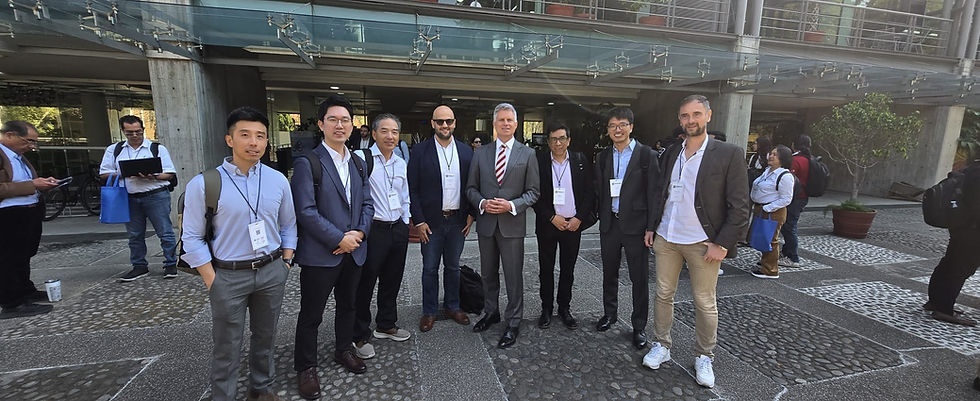
On April 24, 2026, researchers from across disciplines gathered at McGill University for a focused workshop on one of the most pressing challenges in transportation: how to effectively decarbonize mobility systems while maintaining resilience, efficiency, and scalability.
The workshop, titled “Climate, Emissions, and Energy in Transportation: Integrated Approaches for Sustainable Mobility,” brought together expertise spanning climate science, infrastructure engineering, transportation systems, and energy modeling. The objective was direct:
map ongoing research, identify complementarities, and create momentum toward concrete collaboration.

Why This Matters
Transportation decarbonization is not a single-discipline problem. It sits at the intersection of:
Climate modeling and extreme weather analysis
Energy systems and grid integration
Transportation planning and operations
Data science and artificial intelligence
Progress depends on integration. Fragmented approaches slow down impact. This workshop created space to connect these layers in a meaningful way.
Highlights from the Sessions
The program reflected both depth and diversity.
Climate and infrastructure resilience were addressed through work by Laxmi Sushama, Oveys Ziya, and Boyuan Yu, focusing on climate-informed engineering and the impacts of extreme weather events such as flash floods on transportation systems and safety.
Emissions monitoring and environmental analysis were explored by Mary Kang, Jade Boutot, and Mehrnoush Jalali. Their contributions highlighted the complexity of methane emissions detection, combining aerial, satellite, and ground-based approaches, and revealed critical gaps between reported and observed data.
Transportation systems and operational innovation formed another key pillar. Contributions from Luis Miranda-Moreno, Jônatas Augusto Manzolli, Yubo Jiao, Rila Zhu, and Jiangbo Yu covered topics including:
Resilient electric vehicle operations using optimization and agent-based approaches
Eco-driving evaluation under dynamic traffic conditions
Climate sensitivity and recovery of bike-sharing systems
Data-driven and AI-enabled mobility solutions
Together, these perspectives emphasized a shift from static planning toward adaptive, data-informed, and system-level decision-making.


A Clear Direction Forward
One of the most valuable outcomes of the workshop was alignment around next steps. Discussions during the panel session converged on a few concrete priorities:
Developing joint funding proposals targeting integrated mobility-energy systems
Sharing datasets and modeling frameworks across research groups
Co-supervising students to bridge methodological gaps
Structuring a thematic research cluster focused on sustainable transportation
These are not abstract ideas. They are actionable pathways to accelerate progress.
Final Reflection
The strongest signal from the workshop was not any single presentation. It was the recognition that the field is ready to move beyond isolated advances.
We now have the tools, data, and expertise to build integrated solutions. The next step is execution.
This workshop marked the beginning of that shift.


Comments